
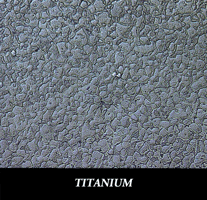
Titanium, renowned for its exceptional strength-to-weight ratio, corrosion resistance, and...
The Art and Science of Metallographic Sample Preparation
Mastering metallographic sample preparation is key to unlocking the secrets of a material's microstructure, ensuring product reliability and revealing the root causes of material failures.
Understanding the Basics of Metallographic Specimen Preparation
Metallography is the study of a material's microstructure, crucial for determining if a material has been processed correctly and for identifying the reasons behind material failures. Proper specimen preparation is fundamental to accurate metallographic analysis. The basic steps include documentation, sectioning and cutting, mounting, planar grinding, rough polishing, final polishing, etching, microscopic analysis, and hardness testing.
Documentation is essential for providing a comprehensive record of the specimen's initial condition and subsequent analysis. Sectioning and cutting involve removing the area of interest from the larger material sample, using techniques like abrasive cutting for metals or diamond wafer cutting for ceramics. Proper cutting minimizes damage and preserves the material's microstructure.
Essential Steps for Accurate Sample Preparation
Mounting the specimen is vital to protect its edges, fill voids, and improve handling. This is often done by encapsulating the specimen in a compression mounting compound or casting it in ambient castable mounting resins. Planar grinding follows, where the specimen is ground to a flat surface using progressively finer abrasives to remove sectioning damage.
Rough polishing removes the damage from planar grinding, typically using diamond abrasives. Final polishing, on the other hand, focuses on eliminating surface damage, often with colloidal silica or alumina on high napped polishing pads. Each step must be performed meticulously to ensure the integrity of the microstructure is maintained for accurate analysis.
Advanced Techniques for Enhanced Microstructural Analysis
Advanced techniques such as differential interference contrast (DIC), optical interferometry, and atomic force microscopy (AFM) can provide more detailed insights into a material's microstructure. DIC enhances specimen features using a Normarski prism, while optical interferometry offers precise surface topography details through phase shifting or vertical scanning interferometry.
AFM provides angstrom-level surface profiling and can analyze electrochemical, magnetic, and other surface features. These advanced techniques complement traditional metallographic methods, offering a comprehensive view of a material's properties and potential failure points.
Practical Tips for Optimizing Sample Preparation
To optimize sample preparation, it's essential to select the appropriate abrasives, lubricants, and equipment parameters based on the material's properties. For instance, using silicon carbide (SiC) for planar grinding and polycrystalline diamond for rough polishing can enhance the process's efficiency and accuracy.
Another tip is to ensure thorough cleaning between each step to prevent contamination and maintain uniformity. For automated preparation, tracking the specimen across the entire diameter of the abrasive paper ensures uniform grinding. Additionally, controlling factors like grinding pressure, relative velocity distribution, and grinding direction can significantly impact the quality of the prepared specimen.
The Role of Metallographic Analysis in Quality Control and Failure Investigation
Metallographic analysis plays a critical role in quality control and failure investigation. By examining the microstructure, material scientists can determine phase structures, grain sizes, solidification patterns, and any defects or voids. This information is invaluable for ensuring product reliability and identifying the root causes of material failures.
For example, analyzing cast iron can reveal whether it has graphite flakes, which are prone to failure under load, or more durable graphite nodules. Similarly, examining the grain size of materials like copper can provide insights into their hardness and ductility. Metallographic analysis helps manufacturers improve material processing techniques and enhance product quality.